
Healthy Soil, Healthy Water, Healthy Iowa
Healthy Soil, Healthy Water, Healthy Iowa
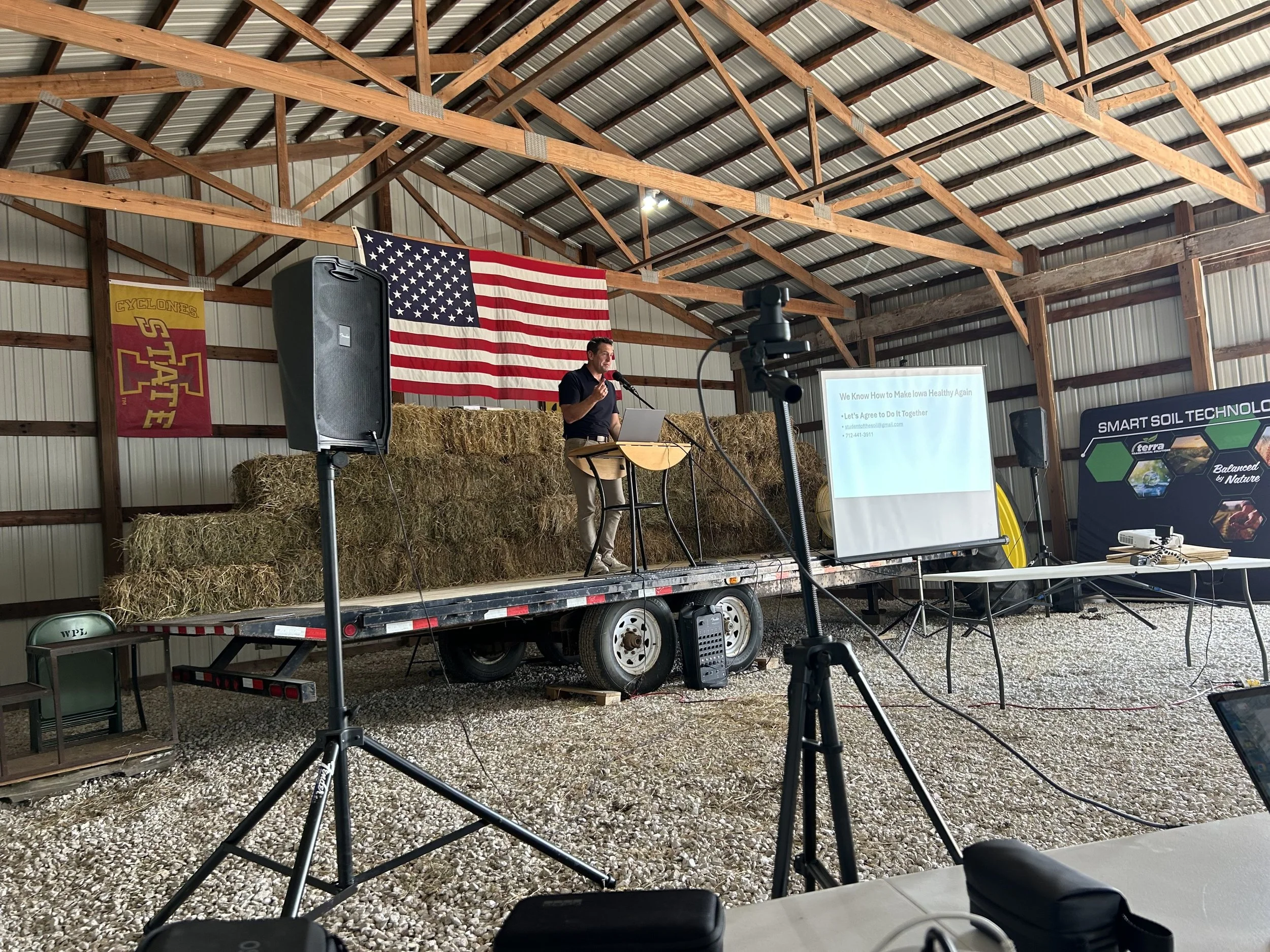
Farmers, scientists, veterinarians, and public officials gathered in Algona to explore how healthier soil can strengthen Iowa’s farms, waterways, livestock, and communities.
In May, during the American Regeneration Summit at Sovereignty Ranch, I reconnected with Howard Vlieger. For more than three decades, Howard has helped farmers and ranchers understand the impacts of genetically modified organisms and the chemical inputs often used alongside them. Just as importantly, he has spent those years seeking practical solutions—tools that enable growers to replace toxic inputs with biological, nature-based alternatives.
Howard told me he was organizing a farm field day in Iowa specifically for state legislators. The idea immediately felt like a natural collaboration. American Regeneration joined the effort, and that initial conversation became the seed for what took place on July 29, 2026, at the Richard Deal Farm near Algona, Iowa.
A Gathering Across the Aisle
Hosted by Evan Deal and Wyatt Streit of Natural Heartland Solutions, the field day brought together farmers, scientists, veterinarians, candidates, and elected officials from both sides of the aisle around one central idea:
Health begins in the soil—and moves all the way up the food chain.
Iowa has long stood at the center of industrialized agriculture, with expansive feedlots and millions of acres dedicated to corn and soybeans. It also faces serious concerns related to water quality, flooding, rural economic resilience, and public health.
This was a relatively small gathering, but it represented something significant: a chance to consider a different future for Iowa’s farms and agrarian communities.
Whether the approach is called biological, regenerative, alternative, or organic agriculture, the message throughout the day was consistent: improving soil function can reduce dependency on costly chemical inputs, improve resilience, support cleaner water, and create more profitable outcomes for farmers.
The audience was equally important. State and federal elected officials and candidates attended not to campaign, but to listen, learn, and engage with farmers and practitioners working directly in the field.
The event was supported by Terra Transitional Solutions and American Regeneration, marking the first collaboration between the two organizations to bring farmers, scientists, and policymakers together around soil health and regenerative solutions.
Building Healthier Soil Systems
Verlyn Sneller of Terra Transitional Solutions opened the day by discussing the role soil health plays in the financial and environmental future of every farming operation.
With more than 45 years of nutrition experience, Sneller described Terra Transitional Solutions’ crop program, which centers on Biomentum, a biological soil and plant nutrition product made with beneficial fungal and bacterial cultures intended to help plants access nutrients already present in the soil.
According to Sneller, farmers across the Midwest are using the program on more than 250,000 acres while reducing commercial fertilizer and pesticide inputs and maintaining—or, in some cases, improving—yields.
The discussion also included applications for livestock operations. Biological approaches are being used to help digest solids in liquid manure, with the goal of reducing odor, fly pressure, and fuel use while supporting improved water quality in nearby waterways.
Lessons From Organic Transition
Dr. Michael McNeil, Ph.D., of Algona, brought more than 40 years of experience helping farmers move toward organic production. He has worked with approximately 120,000 acres in organic transition and production.
Dr. McNeil explained how improving soil biology, nutrient balance, and overall soil function can reduce a farm’s reliance on pesticides. He also emphasized the value of minimizing tillage during transition, allowing soil structure and biological systems to recover with less disruption.
One example involved a large hog producer that compared livestock outcomes using non-GMO grain and GMO grain. According to the producer’s observations, the non-GMO feed program was associated with lower death loss, improved rate of gain, better feed conversion, and fewer days to market. Even with a premium paid for non-GMO grain, the operation reported greater profitability.
Livestock Health and Feed Quality
Dr. Art Dunham, DVM, of Ryan, Iowa, shared insights from five decades in veterinary practice. He described livestock health challenges he has encountered in animals fed GMO feedstuffs, including nutrient deficiencies identified through laboratory testing and associated illness and death loss.
Dr. Dunham discussed client experiences in which operations transitioned back to non-GMO crops and moved away from nutrient-chelating chemical inputs. In those cases, he reported a return to more normal production outcomes and improved profitability.
These farmer and veterinarian observations reinforced an important theme of the day: soil health, crop quality, livestock nutrition, animal health, farm economics, and human health cannot be meaningfully separated from one another.
Soil Health and Flood Resilience
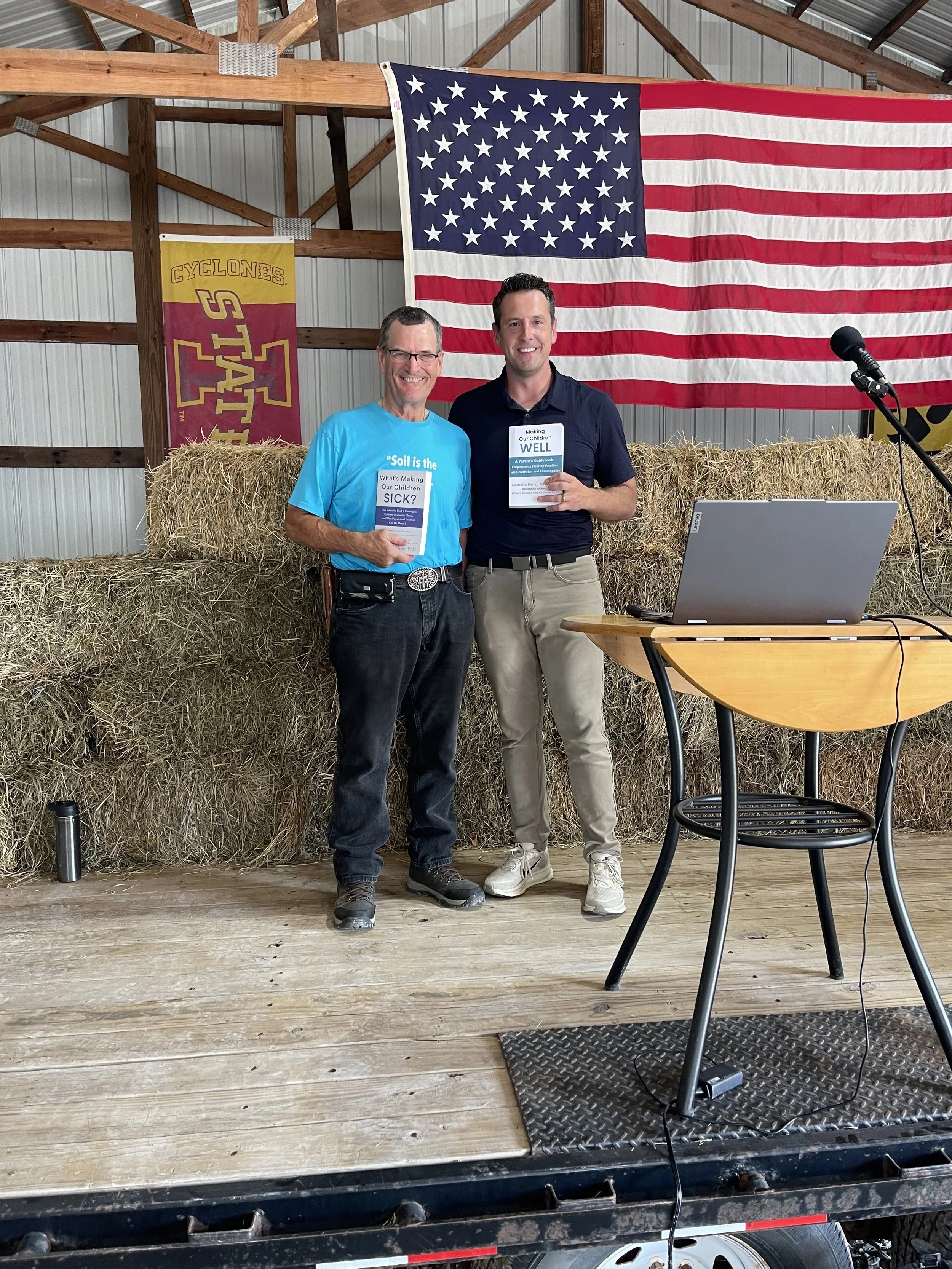
Although I was unable to attend the field day in person, Howard generously presented several slides on my behalf. He shared the story of my own journey into regenerative agriculture—from co-founding Kiss the Ground to building American Regeneration—and offered a glimpse of what becomes possible when a seed of an idea is given the chance to take root.
Howard, a third-generation family farmer and longtime student of soil health, shared striking information about rainfall infiltration and flooding.
NRCS rainfall-infiltration tests in Sioux County found that regeneratively managed land absorbed 5.39 inches of rain per hour, compared with 0.97 inches per hour on conventionally farmed land. When considered across a watershed such as the Rock River basin, that difference in water absorption can help explain why communities such as Rock Valley have faced severe flooding in recent years.
Healthy, biologically active soil does more than grow crops. It can function like a living sponge—taking in rainfall, storing water for dry periods, reducing runoff, and helping keep nutrients and sediment out of streams and rivers.
Howard also shared research and producer data related to GMO corn and soy in pig feed, including information from customers of Luxemburg Feed who had transitioned to non-GMO feed programs. His closing message was simple and practical:
Iowa already has the knowledge needed to address many of these challenges. What is needed now is cooperation across political lines.
A Shared Opportunity for Iowa
Zach Lahn, Republican candidate for governor of Iowa, closed the event. His remarks focused on improving Iowa’s education system, creating more opportunity for graduates, protecting family farms from increasingly consolidated crop-input and commodity markets, and addressing water-quality and cancer concerns across the state.
Lahn also spoke about a recent meeting with U.S. Health and Human Services Secretary Robert F. Kennedy Jr. and U.S. Secretary of Agriculture Brooke Rollins. The discussion focused on expanding access to healthy, locally grown Iowa food in schools—an approach that could benefit children, families, and local farmers alike.
The central point was one that resonated throughout the field day: healthy food, clean water, economically viable farms, and resilient rural communities should not be partisan goals.
Iowa State Senator Lynn Evans summarized the day on social media:
“The field day in Algona was a day spent learning about regenerative farming practices and the benefits of improving soil health on water quality, flood control, and our own health.”
The Algona field day was not the final word on Iowa agriculture. It was a beginning—a conversation among people willing to look honestly at the challenges facing the state and to explore solutions rooted in biology, stewardship, and shared responsibility.
Healthy soil supports healthy crops. Healthy crops support healthy animals and people. And healthier landscapes can support cleaner water, more resilient communities, and a stronger future for Iowa.
