The Birth of American Regeneration and A Milestone Event
Written by Ryland Engelhart
There are moments in history when personal conviction, cultural momentum, and political opportunity converge in ways that feel larger than any one person. For me, that convergence became the birth of American Regeneration.
The seeds were planted years earlier.
About seven years ago, I met Robert F. Kennedy Jr. at an intimate dinner gathering hosted at the home of Jane Fonda. The evening had been convened by our mutual friend Laura Sydell Turner, who has a gift for bringing together environmental leaders, activists, and visionaries who might otherwise never cross paths.
At the time, Kennedy was deeply known for his decades of work protecting waterways through Waterkeeper Alliance, while I was immersed in advocating for soil health and regenerative agriculture through Kiss the Ground and the documentary film Kiss the Ground, which helped elevate soil health into the national conversation.
What began as a professional exchange quickly became something more personal and authentic.
We spoke openly about life experiences, healing, and the growing cultural conversation around plant medicine. Kennedy, who has long been public about his sobriety, spoke candidly about witnessing profound healing within members of his family. Coming from a more alternative upbringing myself, raised by hippie parents and unvaccinated, I was naturally curious about what had shaped his strong focus on the highly debated issue of vaccines.
I often joke that when we first met, our entire conversation revolved around two subjects: ayahuasca and vaccines.
But beneath those topics was something more meaningful: a sincere effort to understand one another’s lived experience.
That evening marked the beginning of a relationship grounded in trust and a shared recognition that human health and environmental health are inseparable.
Over the following years, our connection deepened gradually through occasional conversations, mutual friends, and my ongoing effort to share the people, farms, and regenerative agriculture projects I believed deserved greater visibility.
Then came Kennedy’s presidential campaign announcement.
I still remember watching his first campaign video. Tears streamed down my face. Throughout my life, I have felt compelled to champion hopeful solutions in a world saturated with pessimism. I once had a psychic tell me, “Your job in life is to point at things and build movements behind them.” In that moment, I felt called to point toward Kennedy.
I posted a photo of myself crying with the caption: “A psychic once told me my job was to point at things and build movements behind them. I am pointing at RFK for President.”
The next day, I was advised to remove the post because it was considered too politically risky for someone associated with a nonprofit organization. Wanting to avoid conflict, I took it down and went quiet publicly.
Privately, however, I continued supporting the campaign for nearly a year through fundraising, introductions, and connecting Kennedy’s platform with leaders in regenerative agriculture. I believed then, and still believe now, that soil health must become central to public health policy.
A pivotal moment arrived during a fundraiser outside Austin, Texas, where I had been invited to speak on a panel about regenerative agriculture. The evening concluded in a highly unconventional way: roughly forty organizers and close supporters gathered together for a sweat lodge ceremony to envision Kennedy’s success in the presidential race.
Inside the pitch-black lodge, glowing red-hot stones were placed at the center while water and herbs were poured onto them, filling the space with steam, prayer, song, and reflection. The experience was led by a Brazilian musician alongside a young Lakota facilitator.
In that sacred space, I realized something about my own life: every meaningful opportunity I had ever received came because someone believed in me and championed my aspirations.
During one of the rounds of prayer and song, a message landed deeply in my heart: champion this man.
I spoke that commitment aloud inside the sweat lodge, and from that moment forward, I felt resolute.
That decision ultimately led me to step away from my previous organization due to unavoidable political and social tensions surrounding public support for Kennedy’s campaign.
At the same time, others working at the intersection of agriculture, law, and human health were arriving at similar conclusions. People like Kelly Ryerson, who had followed Kennedy’s involvement in glyphosate litigation, had witnessed firsthand the human consequences of chemical-intensive farming systems. Influences reaching back to Silent Spring had helped shape a growing movement that questioned the long-term sustainability of modern industrial agriculture.
As the 2024 election cycle intensified, Kennedy became a lightning rod for controversy. Yet beneath the political noise, something deeper was happening across America.
Food and human health were emerging as unifying concerns that transcended political identity. Increasingly, families from every background were asking the same fundamental questions:
Why is our food system making us sick?
Why are chronic diseases rising?
And what would it look like to rebuild a healthier relationship between agriculture, land, and human well-being?
At the same time, we observed a profound education gap in Washington. Many policymakers remained disconnected from the realities of farming and ranching, while large institutional interests often shaped an incomplete narrative about agriculture’s future.
We saw both a problem and an opportunity.
This was a moment to build a bridge: an organization capable of connecting regenerative agriculture leaders with policymakers while helping shape a broader national vision rooted in soil health, nutrition, and rural resilience.
That realization led to the founding of American Regeneration.
Together with collaborators including Kelly Ryerson, wellness entrepreneur John Roulac, and regenerative farming pioneer Rick Clark, we launched the organization with a simple mission: convene farmers, scientists, innovators, and practitioners to close the information gap between those shaping policy and those stewarding the land.
Soon, that mission became connected to a broader national conversation surrounding “Make America Healthy Again.”
Momentum accelerated when I received a call from White House advisor Calley Means.
“Can you coordinate a regenerative farm tour for Secretary Kennedy and Secretary Rollins?” he asked. “They want to announce a MAHA collaboration between HHS and USDA.”
I had been waiting for that call.
Within days, we mobilized farmers and organized a host farm near Washington, D.C., designed to showcase regenerative agriculture at the highest level.
Then, only two days before the event, it was canceled.
Concerns surrounding media optics tied to misunderstood imagery around hemp production, combined with unresolved policy considerations, made the moment politically sensitive.
At first, it felt like a major setback.
But in hindsight, it clarified our purpose.
Rather than viewing the cancellation as failure, we recognized it as evidence of how urgently education and relationship-building were needed. We gathered leading regenerative agriculture practitioners and food-system innovators and committed ourselves to bringing their ideas directly into conversation with policymakers and federal agencies.
Over the next eight months, American Regeneration made six trips to Washington, D.C., organizing farmer fly-ins, participating in MAHA soil health roundtables, and helping regenerative producers gain direct audiences with officials inside the USDA and HHS. We also helped support the first The Heritage Foundation event focused specifically on regenerative agriculture and contributed feedback and strategic direction to early MAHA policy discussions and reporting surrounding soil health, nutrition, and the root causes of chronic disease. Through these efforts, we worked to elevate regenerative agriculture as a practical and scalable solution for restoring human health, rural economies, and ecological resilience.
Throughout all of this work, one reality became increasingly clear:
Even at the highest levels of government, there remains a significant gap in understanding not only agriculture itself, but agriculture’s enormous potential to restore human and ecological health.
Yet another path is already emerging through farmers and ranchers across the country who are proving that regenerative systems can be economically viable, ecologically restorative, and deeply nourishing for communities.
That realization set the stage for our first major public gathering.
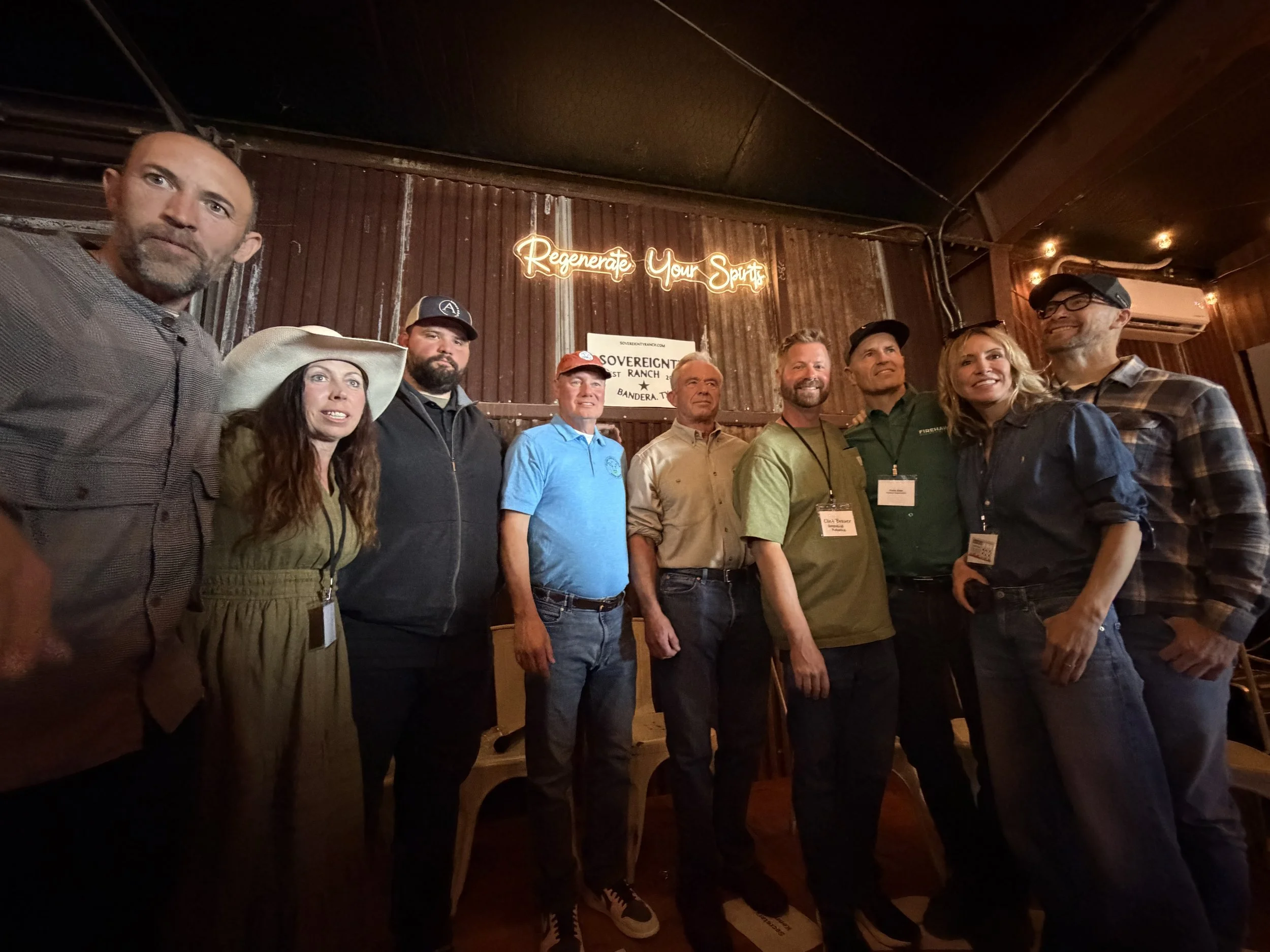
On May 1–2, American Regeneration partnered with Acres USA to host the inaugural American Regeneration Summit at Sovereignty Ranch under the theme “The New American Dream.”
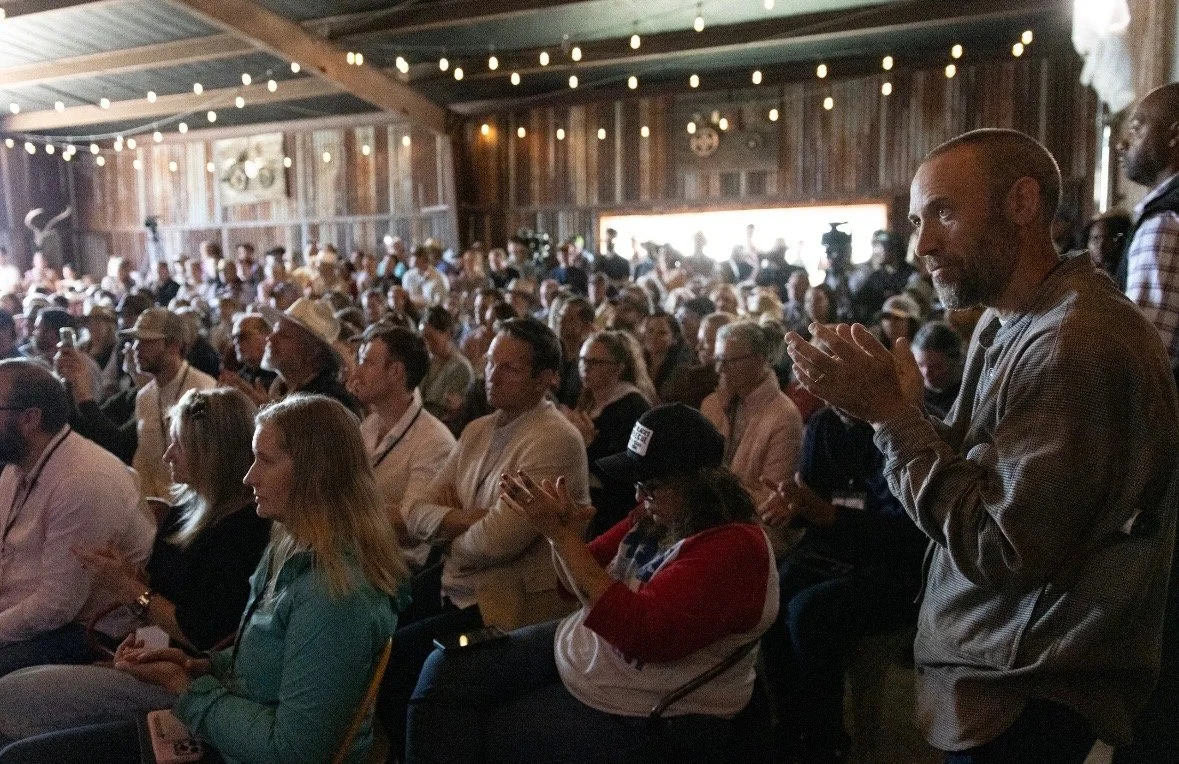
The summit brought together agricultural producers, homesteaders, entrepreneurs, conservation leaders, policymakers, and even skeptical neighbors for an immersive two-day experience exploring regenerative agriculture as a viable future for rural America.
Unlike many conferences, the gathering itself reflected the values being discussed. Meals were served at the ranch’s farm-to-table restaurant, The Barn, featuring regeneratively raised meats, fresh sourdough bread, wood-fired pizza, fermented vegetables, and local farm cheeses. The atmosphere fostered genuine fellowship and conversation between sessions, creating what many attendees described as one of the most meaningful regenerative gatherings they had experienced.
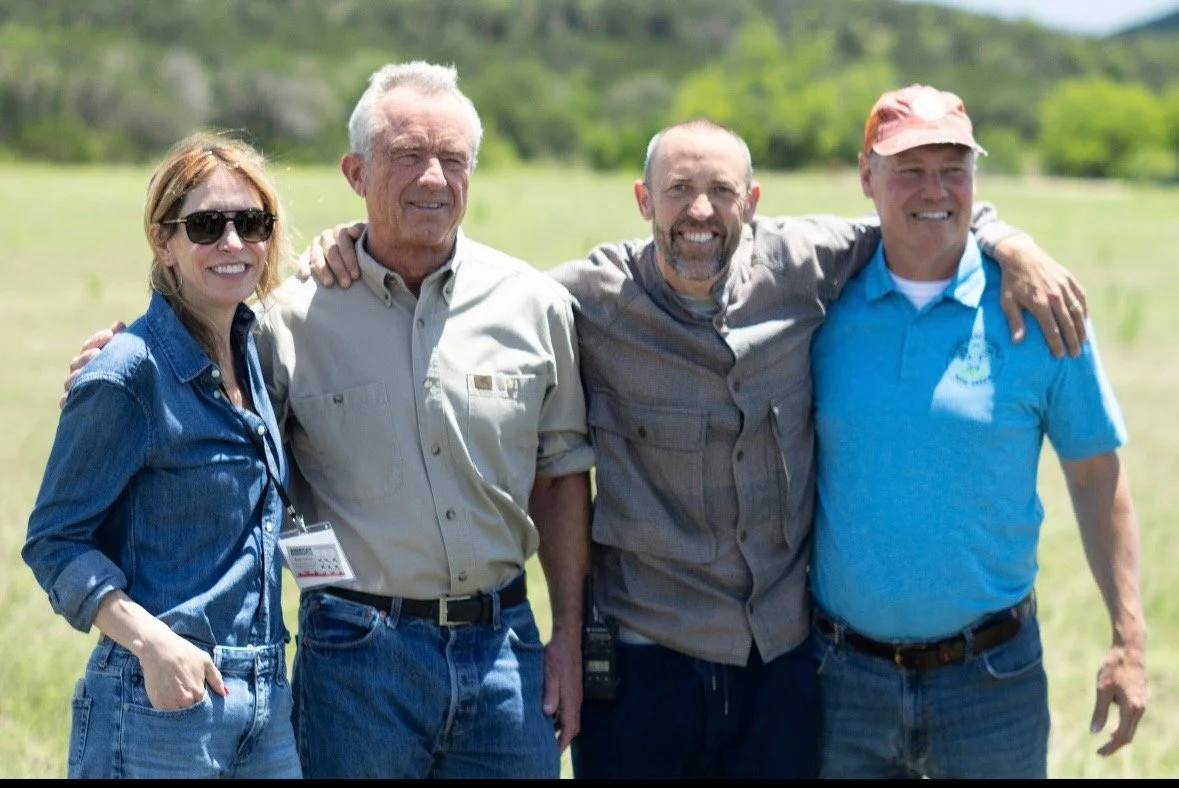
Special invited guests included Secretary Kennedy, Texas Agriculture Commissioner candidate Nathan Sheets, Jimmy Emmons, Dr. Ben Edwards of Veritas Wellness, Robby Sansom, Clint Brauer, Jenni Harris, and organic farming pioneer Bob Quinn, alongside many others from agriculture, health, and public service.
At its core, the summit reflected the founding belief behind American Regeneration:
Real change happens when people gather on the land itself to rebuild the systems that shape food, health, and the future of our nation.
And this is only the beginning.